Webcam site indexation: why model pages go missing
Most webcam platforms have far more pages than Google keeps. How to read the page indexing report status by status, the causes specific to cam sites, and a realistic target.
- Topic
- Technical
- Reading time
- 6 min
- Last checked
- Sections
- 6
The short answer
Webcam platforms lose pages from Google for a handful of repeat reasons: profiles too thin to be worth indexing, offline pages that look empty, the same performers shown on several white-label sites, crawl spent on filters, and verification walls that answer crawlers with an error. The page indexing report in Search Console tells you which one you have, as long as you read it by page type instead of as one big number.
Read the report by page type
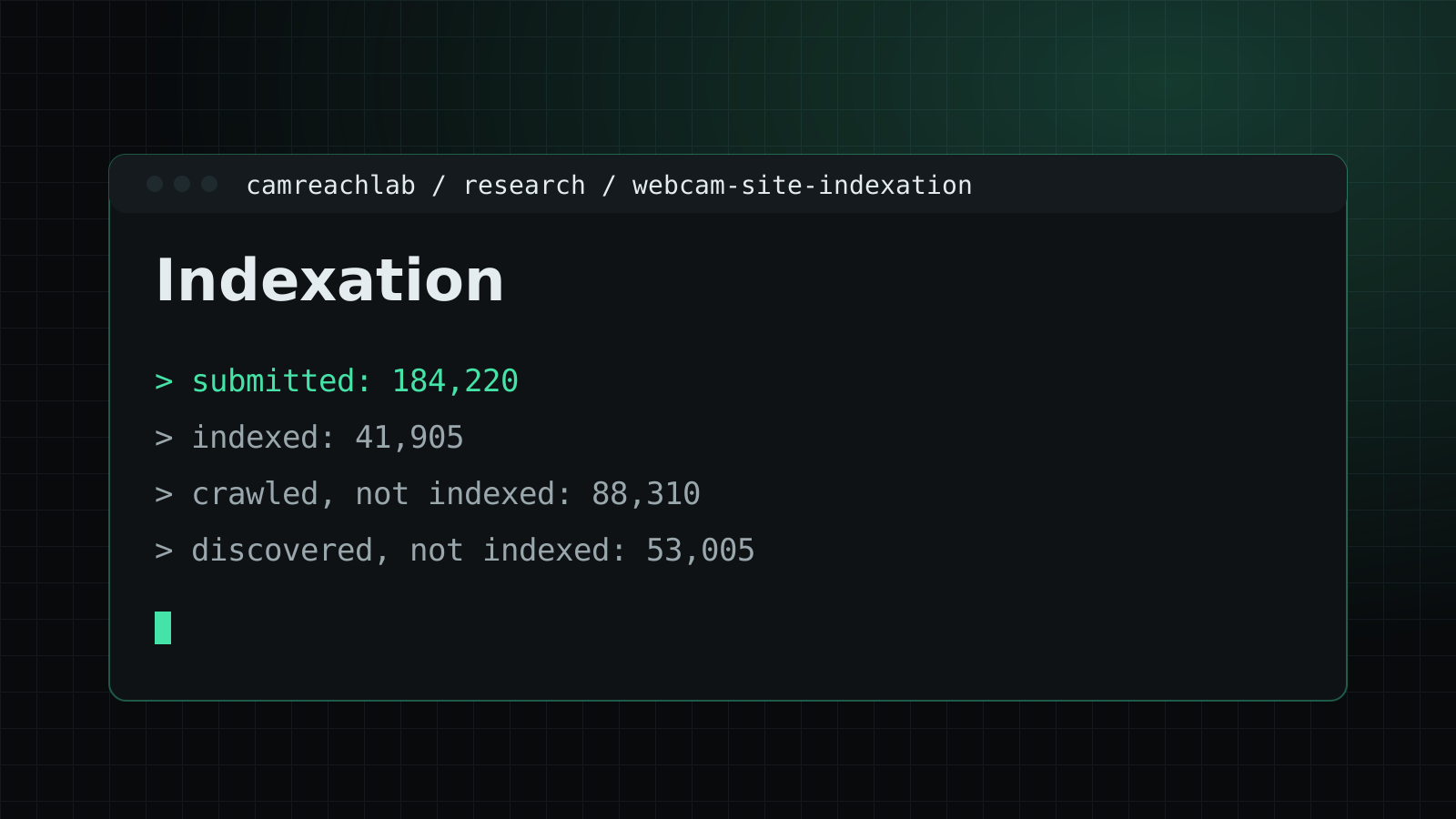
A platform with 200,000 URLs and 40,000 indexed looks alarming. It may be fine, if the 40,000 are the right pages. It may be a disaster, if they are mostly tag combinations while real profiles sit outside.
So the first step is always to split. Export the examples from each status, then sort them into your page types: model profiles, categories, tag combinations, search results, schedule pages, and anything else your templates produce. The question stops being "why are so many pages not indexed" and becomes "which of our important page types are missing, and why".
What each status usually means on a cam site
| Status in Search Console | Usual cause on a webcam site | What to do |
|---|---|---|
| Crawled, currently not indexed | Profiles with a username and a thumbnail only, or categories with templated text | Raise the content standard, or keep those pages out of the index until they meet it |
| Discovered, currently not indexed | Crawling spent on filters and sort orders; profiles linked only from deep pages | Cut crawl waste and link profiles from categories that are crawled often |
| Soft 404 | Offline profiles or quiet categories that render almost empty with a normal status | Show bio, schedule and related performers when nobody is live |
| Duplicate without user-selected canonical, or Google chose different canonical than user | The same performers and text on white-label or partner sites | Decide which domain owns each profile and differentiate or canonicalize the rest |
| Blocked due to access forbidden (403) | An age or geo wall answering the crawler with an error | Check what a visitor from the crawl location receives, and fix it for both |
Google's own descriptions are worth knowing. "Crawled" means the page was fetched and not indexed, and Google says there is no need to resubmit it. "Discovered" means Google knows the URL but has not fetched it yet, typically because crawling was rescheduled to avoid overloading the site.
The white-label problem
Many cam businesses run several branded sites on one shared platform, or feed performers to affiliate "white-label" sites. The result is the same model, with the same bio and often the same thumbnail, on five domains at once.
Google picks one version to show and treats the others as duplicates. If you do nothing, it may pick a partner's site over your own. Decide which domain should own each profile. On the others, either add something that is truly different, such as a site-specific introduction and that site's own schedule and categories, or point a canonical tag to the main version and accept that those copies will not rank. A profile standard makes the first option realistic.
Offline pages and soft 404s
Cam sites produce soft 404s in a way few other sites do. A profile or category can be full at night and nearly empty in the morning. If the empty version is the one Google crawls, it looks like a page with nothing on it that still claims to be fine.
The fix is design, not a tag: make the offline state a complete page. Bio, schedule, recent activity and links to similar performers stay put whether or not anyone is streaming. Our research on inactive model pages covers what to do when "offline" becomes "gone for months".
A realistic target
Zero exclusions is neither possible nor useful. A healthy platform keeps filters, search results and empty profiles out on purpose. The number that matters is coverage of the pages you chose: the share of active, complete profiles and indexable categories that Google has indexed.
Google's AI features draw on its index, so a profile Google has not indexed cannot be cited there either. Other AI assistants use their own crawlers, which is why crawler access is checked separately in technical cam SEO.
Most indexation fixes come back to crawling: where Googlebot spends its time, and whether the important pages are easy to reach. That is the subject of our research on crawl budget, and it is a core part of platform SEO.
Questions teams ask
Should every model page be indexed?
No. Profiles with no text, inactive accounts and filter pages are better out of the index. The target is that every page you want indexed is indexed, not that the report shows zero exclusions.
Does requesting indexing fix "Crawled, currently not indexed"?
Rarely. Google already crawled the page and decided against indexing it, and its help text says there is no need to resubmit. Improve the page or the pages around it, then let it be recrawled.
Do unindexed pages show up in AI answers?
Google's AI features draw on its index, so a page Google has not indexed cannot be cited there. Other AI tools use their own crawlers, which is why crawler access is a separate check.