Cam model profile SEO: pages that rank at platform scale
Most model pages on a platform are a username, a thumbnail and a tip menu. How to get real text out of thousands of performers, mark the page up correctly and decide which profiles deserve the index.
- Topic
- Platforms
- Reading time
- 6 min
- Last checked
- Sections
- 7
The short answer
A model profile on a webcam platform ranks when it is clearly about one performer, carries text that belongs only to them, and stays useful when they are offline. That means a written bio from guided questions, a schedule in plain text, category links, a stable image and correct markup. Profiles that do not meet that standard yet are better kept out of the index than left to drag the rest of the site down.
What a profile has to do
On a platform, a profile page has two audiences. Fans search the stage name, often with the platform's name, and expect the profile to come first. New visitors arrive from a category or a search and need a reason to stay.
Most platforms serve both badly. A typical profile is a username, a thumbnail, a tip menu and a chat window that only works during a show. Multiply that by fifty thousand performers and the platform has fifty thousand near-identical pages, which is how search engines end up judging the whole domain as thin. Our platform SEO page covers the site-wide side of that.
The anatomy of a profile that ranks
Read the page from top to bottom, the way a visitor does on a phone.
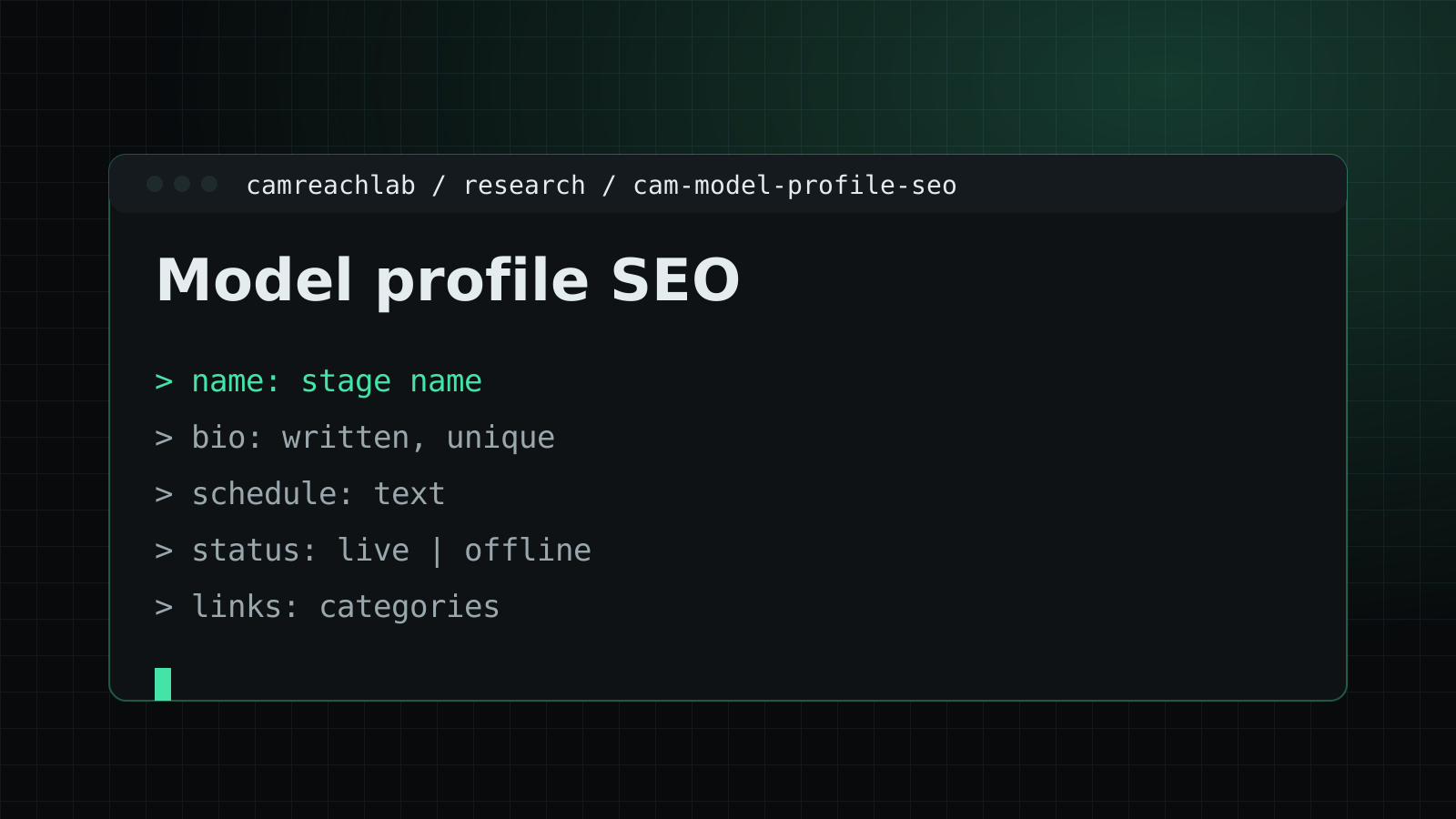
- The stage name as the main heading, with the handle if it differs.
- A short written bio in the performer's own words, answering a few specific questions.
- The usual schedule as text, in a time zone the visitor can read, plus the next planned show.
- Categories as normal links, so the profile connects to the rest of the site.
- A clear status: live now, offline, or on a break.
- Similar performers, a handful of links chosen by category, not a random carousel.
All of it should be in the first HTML response, not loaded later by scripts. The technical SEO page explains why.
Getting real text from thousands of performers
Nobody writes a good bio into an empty box labeled "About me". Guided questions work much better: what kind of shows do you do, when do you usually stream, what languages do you speak, what should a first-time visitor know. Four short answers produce a paragraph no other profile has.
Two rules make this work at scale. First, set a minimum standard for indexing, such as a completed bio and schedule, and keep profiles below it out of the index until they meet it. Second, moderate the text like any other user content, because a bio is the easiest place for spam and links to other sites to slip in.
It is tempting to fill empty profiles with generated text. Google's spam policies call mass-produced pages made mainly to rank scaled content abuse, whether a person or software wrote them. Thousands of generated bios are exactly that pattern.
The same bio on three platforms
Many performers stream on more than one platform and paste the same bio everywhere. Google usually shows only one of several identical pages, and the biggest site tends to win. For a mid-sized platform, that means its profiles lose to the same text elsewhere.
The fix is small: ask for a platform-specific opening line during signup, show the schedule for your platform, and surface your own data, such as categories and recent shows, that other sites do not have.
Markup: ProfilePage with a stage name
Google documents ProfilePage structured data for pages about a creator, with a Person as the main entity. It fits model profiles well. Use the stage name as name, the platform handle as alternateName, and sameAs to link the performer's own website if they have one. Never put a legal name in markup, even if the platform holds it for verification.
Be realistic about what it does. Google does not show rich results for pages it treats as explicit, so the markup is unlikely to change how the listing looks. What it does is state clearly which person the page is about and connect that performer across sites, which helps both search engines and AI tools. Performers who run their own site can find the other half of this on our cam model SEO page.
Where to start
Pull a sample of five hundred profiles and sort them into three groups: meets the standard, close to it, and empty. Most platforms find the empty group is the largest. Keep it out of the index, fix the signup questions so new profiles arrive complete, and work through the middle group first. Profiles that go quiet for months need their own rule, covered in our research on inactive model pages. Packages that include this work are on the pricing page.
Questions teams ask
Should model profiles use ProfilePage structured data?
It is a good fit: Google documents ProfilePage for pages about a creator, with a Person as the main entity. Use the stage name as the name, never a legal name, and link the performer's own site with sameAs.
How much text does a model profile need?
Enough that it could only describe that performer. In practice a few short paragraphs from guided questions at signup beat one long bio that nobody updates.
Can we write bios for performers automatically?
We would not. Generated bios read the same across thousands of pages, which is the pattern Google's scaled content policy targets. Guided prompts that performers answer in their own words work better.