Webcam category page SEO: titles, copy and layout that rank
Most category pages share one title pattern and one paragraph with the name swapped. Side-by-side examples of weak and strong titles and copy, and a layout that still works at quiet hours.
- Topic
- Content
- Reading time
- 6 min
- Last checked
- Sections
- 6
The short answer
A webcam category page ranks when its title says what the category is without a template around it, its copy tells a visitor something true about that category, and its layout still works when few performers are live. The examples below use a neutral category, cosplay, to show the difference between a page built from a pattern and one written for its subject.
Titles: pattern versus description
Google's guidance on title links warns against boilerplate: long titles that repeat across a site and change by a single word. It uses a band site as the example, where every page carries the same list of "videos, lyrics, posters, albums" around the band's name. Many cam platforms do the same with category titles.
Weak
Cosplay Cams - Free Live Cosplay Cam Chat - Watch Cosplay Shows Now | Site
The category name three times, a phrase every category shares, and nothing a visitor could not guess.
Stronger
Cosplay live shows: costumes, characters and weekly schedule | Site
Says what the category actually offers, and the second half would change from category to category.
Leave live counts out of titles. "143 live now" is wrong a minute later, so the snippet in search results is always stale, and Google may replace a title that does not match the page with text of its own choosing.
Copy: the swap test
Take a category paragraph, replace the category name with another one, and read it again. If it still makes sense, it was a template.
Weak
"Welcome to our cosplay cams! Here you will find the best cosplay performers online. Browse our cosplay category and enjoy live cosplay shows with the hottest cosplay models."
Stronger
"Performers here stream in costume, most often as game and anime characters, and many take character requests during the show. The category is busiest on weekend evenings US time, and several performers run themed weeks listed in the schedule below."
The second version cannot be moved to another category. It also uses information the platform already has: tags performers choose, peak hours from the data, scheduled shows. That is how category copy scales honestly: short, factual, built from real signals, and reviewed by a person. Google's spam policies treat mass-produced pages made mainly to rank as scaled content abuse, whoever or whatever wrote them, and the weak example is what that looks like at scale.
A layout for every hour
Category pages live and die by the grid, and the grid depends on who is online. The page has to work at 3 a.m. as well as at peak.
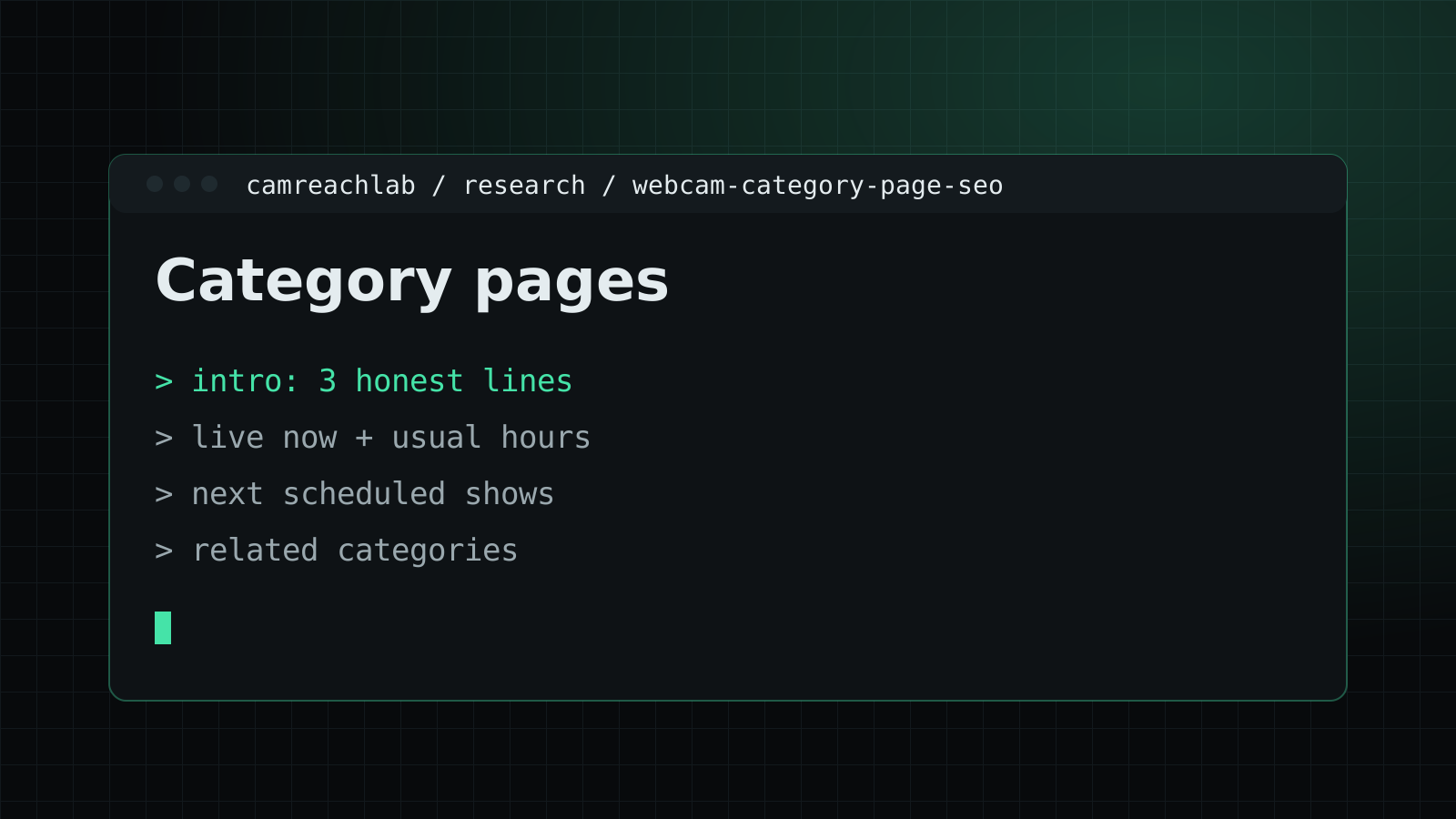
- Title and one or two sentences that make the subject plain.
- Performers live now, sorted however members like.
- Performers who usually stream here, with their typical hours, always present, so the page is never empty.
- Next scheduled shows in the category.
- The rest of the copy: when the category is busiest, what sets it apart, and two or three related categories as normal links.
Everything in that list should be in the first HTML response. Items 3 to 5 are also the stable links that give crawlers a steady path to profiles, which our research on internal linking explains.
Images and wording above the fold
Category pages are where SafeSearch decisions are most visible, because they mix many performers' previews on one page. Keep the text factual and non-graphic, and prefer safe preview images in the first rows. That keeps the page easier to show for broader searches and easier for AI tools to describe accurately.
No category name, title or copy should suggest minors or non-consent, whatever terms other sites use. It is a legal and payment-provider line as much as an ethical one.
Where to start
Export the titles of your top fifty categories and look at them in a spreadsheet. If most follow one pattern, rewrite the ten with the most search demand first, then their copy, then the layout. Which categories should be indexable at all is covered in category SEO, and the crawl side of filter pages in our research on crawl budget. Category work sits inside the Studio and Platform packages on the pricing page.
Questions teams ask
Should the number of live performers go in the title?
No. The count changes every minute, so the snippet in search results is always wrong, and a changing title gives Google a reason to write its own. Show live counts on the page instead.
Where should category copy go, above or below the grid?
Split it. One or two short sentences above the grid so the page is clearly about the category, and the longer part, such as usual hours and related categories, below it where it does not push performers down.
How long should category copy be?
As long as it has something true to say. For most categories that is a short introduction and two or three short sections, not a long block written for search engines.